
Refurbishment and fit-out without closing the practice
Most clinical buildings cannot close for their own refurbishment. Phased works break the job into sections that are built, commissioned and handed back one at a time, with a working route for patients and staff at every stage and every service isolation agreed in advance rather than discovered on the day.
- Sequenced around the clinical day, section by section
- Sealed temporary partitions with their own extract for dusty work
- Every isolation of power, water, air or extract agreed in advance
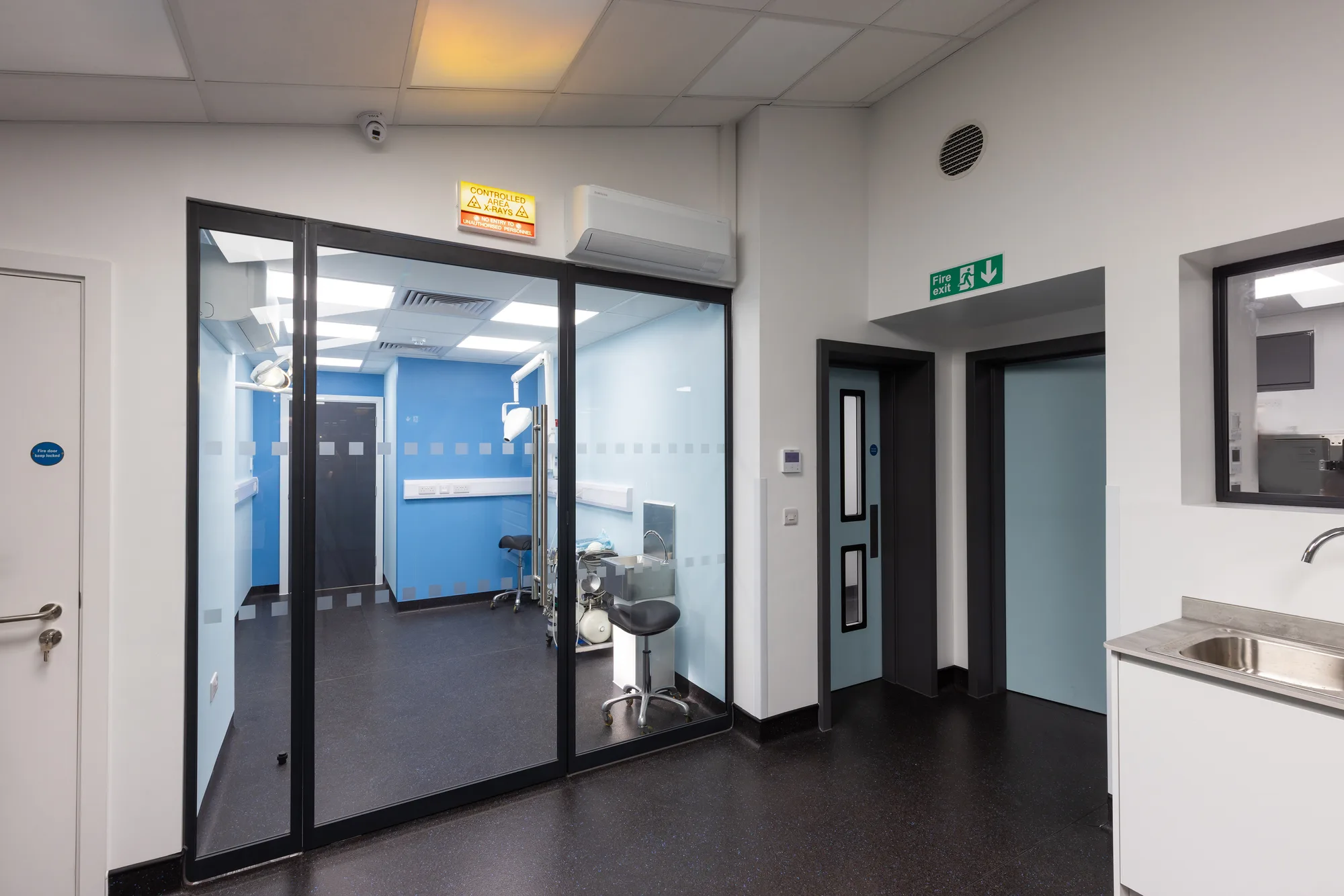
How a phased programme runs
Five stages. Almost all of the value is created in the first two, before anyone is on site.
-
Survey and clinical mapping
The building and its services are surveyed, and mapped against how it is actually used: which rooms cannot stop, which can be doubled up, and where the services serving one section run through another.
-
Agree the phasing
The sections, the order and the isolations are agreed with the practice before a price is fixed, because the phasing is what determines the cost far more than the finishes do.
-
Enable and contain
Temporary partitions, extract, routes and signage go in first, and any temporary services that keep a critical room running are installed and proven before the section it serves is touched.
-
Build section by section
Each section is built, commissioned, cleaned and handed back before the next is opened up, with the containment moved rather than extended.
-
Close out
Temporary works removed, the building reinstated, and one consolidated handover pack issued covering every section and every certificate.
What a live practice actually needs from a contractor
The construction is rarely the hard part. Keeping a regulated building usable, cleanable and defensible while it is a construction site is the hard part, and it is planned before anyone arrives on site.
We do not publish a standard programme length, because a phased programme is set by your clinical timetable and not by ours.
- A patient route and a staff route that exist at every stage of the programme
- Dusty and noisy work contained behind sealed partitions with their own extract
- Isolations of power, water, ventilation, air or suction timed with the practice manager
- The rooms that cannot stop kept in use until their replacements are commissioned
- Each finished section cleaned and handed back before the next is opened up
The phasing plan is the deliverable, not the programme bar chart
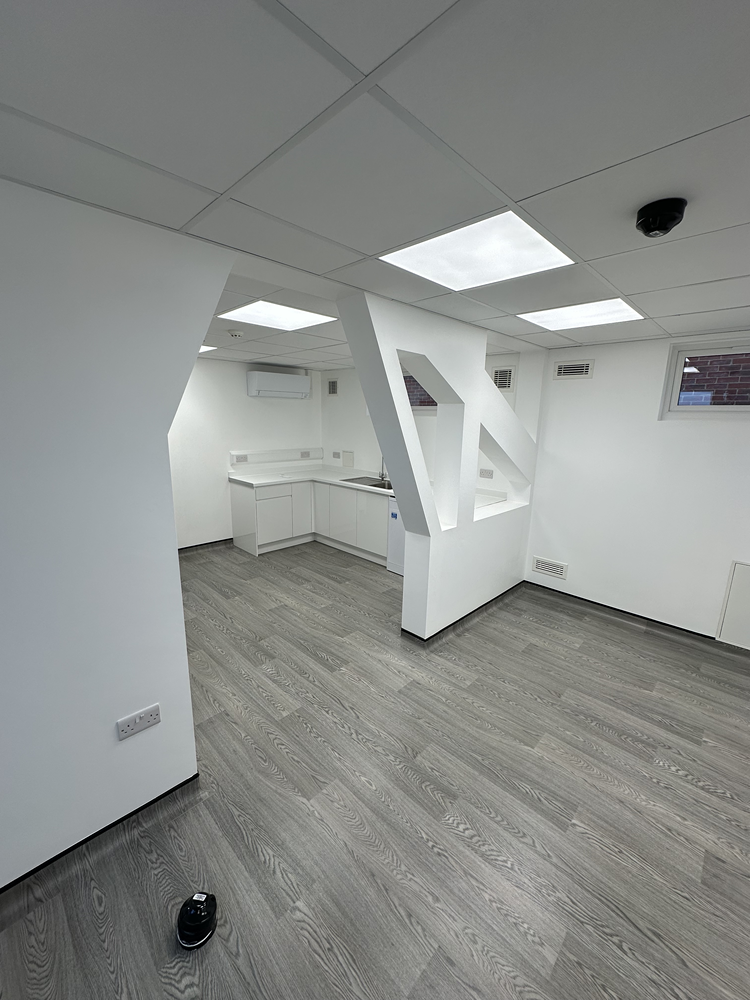
The plan is what you are buying. The construction is what it enables.
Any competent contractor can build a treatment room. What decides whether a practice comes out of a refurbishment with its caseload intact is how the building was divided, in what order the sections were taken, and what was done about the services that cross between them. Get that right and the disruption is a series of manageable weeks. Get it wrong and the practice loses the rooms that generate the income, in the same fortnight, because nobody traced which distribution board fed what.
So the phasing is agreed before the price, not after it. That is the opposite of the usual sequence and it is deliberate. How a building is divided is a bigger cost driver on this kind of work than the specification of the finishes, and it is a clinical decision as much as a construction one. The practice knows which rooms cannot stop. We know which ones cannot be built independently. The plan comes out of putting those two together.
What containment actually means here
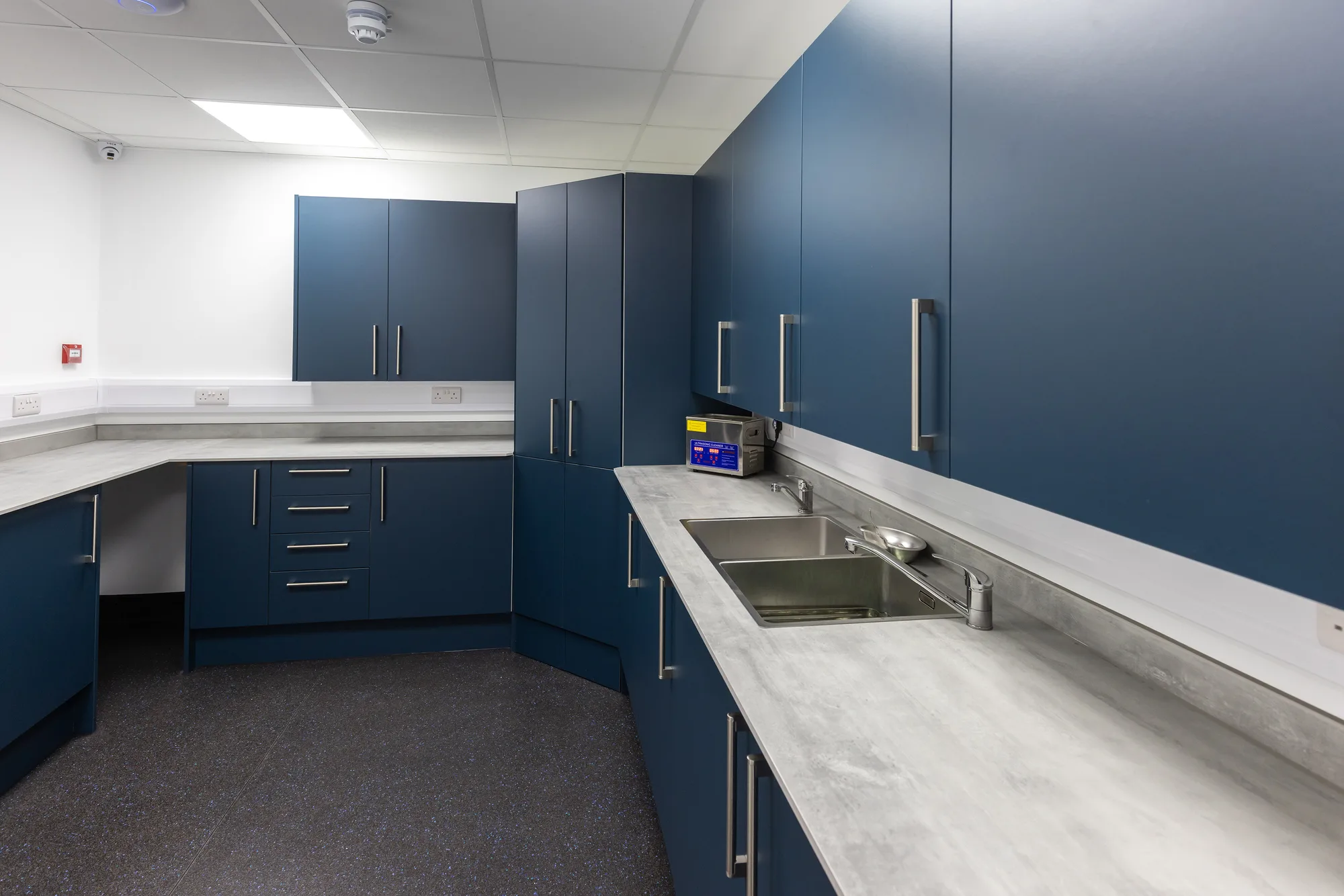
Not sheeting and good intentions. A sealed enclosure with its own extract.
Dust is the risk that matters in an occupied clinical building, because it travels, it settles on surfaces that are supposed to be clean, and it is the thing an infection control lead will reasonably object to. The HSE treats it as a health risk to be assessed and controlled rather than as mess to be swept up. Meeting it in a working practice means rigid sealed partitions rather than polythene, extract that holds the working side negative to the occupied side, and a cleaning regime between phases that is scheduled and priced rather than absorbed.
Noise and vibration are the second constraint and they are handled differently, by scheduling rather than by containment. The work that cannot be made quiet is identified during the phasing conversation and placed into hours the building can absorb it. Access is the third: a construction site inside a regulated building has to keep unauthorised people out of it, which is a legal duty on the site and not only a courtesy to the practice, and the patient route has to keep working while it does.
Where phased delivery applies
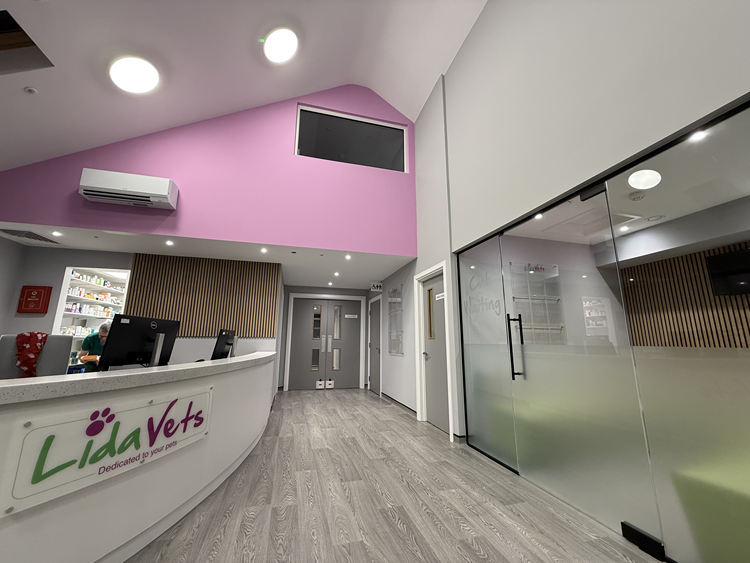
Wherever the building is regulated, occupied and generating income at the same time.
That covers most veterinary practices, where the theatre and the imaging room cannot be out together; most dental practices, where the appointment book is filled weeks ahead and the decontamination room serves every surgery; and most medical clinics, where an interrupted referral pathway is slow to rebuild. The constraint is the same in each: a room that stops earning is worse than a programme that takes longer.
Phased delivery is a way of running the work rather than a separate scope, so it sits over the others. A practice fit-out or a full practice refurbishment can both be delivered this way, and a mechanical and electrical upgrade in a working building almost always is. Where the layout is not yet settled, design and build puts the phasing into the design stage where it belongs. Completed projects appear on our work pages as each client releases its material.
Standards governing this work
The requirements that shape how this work is planned and built, each quoted from the regulator that sets it and linked to the source.
| Code | Standard | What it requires | Source |
|---|---|---|---|
| CDM 2015 reg 12 | Construction (Design and Management) Regulations 2015, regulation 12, construction phase plan | The construction phase plan must set out the health and safety arrangements and site rules taking account, where necessary, of the industrial activities taking place on the construction site, and must include specific measures concerning work which falls within one or more of the categories set out in Schedule 3. | legislation.gov.uk |
| CDM 2015 reg 13 | Construction (Design and Management) Regulations 2015, regulation 13, duties of a principal contractor at the construction phase | The principal contractor must ensure that a suitable site induction is given, take reasonable steps to prevent access by unauthorised persons to the construction site, and ensure that facilities that comply with the requirements of Schedule 2 are provided throughout the construction phase. | legislation.gov.uk |
| CAR 2012 reg 5 | Control of Asbestos Regulations 2012, regulation 5, identification of the presence of asbestos | Before work which exposes or is liable to expose employees to asbestos, the employer must have carried out a suitable and sufficient assessment as to whether asbestos, what type of asbestos, contained in what material and in what condition is present or is liable to be present in those premises, and where there is doubt must assume that asbestos is present and that it is not chrysotile alone. | legislation.gov.uk |
| HSE construction dust | Health and Safety Executive, construction dust | Construction work must protect against the risks from hazardous construction dusts following the assess, control and review model, because construction dust causes diseases including lung cancer, asthma, chronic obstructive pulmonary disease and silicosis. | HSE |
Figure
How a phased programme moves through a working building
The building is divided into sections that can be built and handed back one at a time, and the works travel through it rather than occupying all of it. These are four moments in the same building. The hoarding line moves; it does not extend. At every one of them the practice has a working route, a usable set of rooms and, after the first, a finished section it has already got back.
-
1 Section one
Sections two and three trading
-
2 Section two
Section one handed back
-
3 Section three
Sections one and two handed back
-
4 Close out
All sections trading
- Hoarding line, and the section behind it
- Route kept open at every stage
- 1 Section one Practice open Containment, temporary routes and any temporary services go in before anything is taken out of use. This is the item clients most often try to price out, and it is the one that keeps the practice trading.
- 2 Section two Practice open Section one is commissioned, cleaned and released back before this one is opened up. The hoarding moves rather than extends, so the practice never has two areas out of use at once to suit the builder.
- 3 Section three Practice open Two thirds of the building is back in use and the works are confined to the last section. When this one starts is decided by the clinical timetable rather than by the programme.
- 4 Close out Practice open Temporary works removed, the last section released, and one consolidated handover pack issued rather than three partial ones.
Where we deliver this work
Every sector below is a kind of clinical building we work in. Each page names the standards that govern it and links to the regulator for every requirement it states.
- VeterinaryClinical Visions designs, builds and commissions veterinary practices, referral centres and hospitals across the UK: consulting rooms, prep and theatre suites, imaging rooms, wards, laboratories and reception.
- DentalClinical Visions designs, builds and commissions dental practices across the UK: surgeries, decontamination rooms, dental radiography, staff areas and reception.
- MedicalClinical Visions designs, builds and commissions medical premises across the UK: consulting and treatment rooms, minor procedures rooms, diagnostic imaging, clean utility and reception.
Related specialist rooms
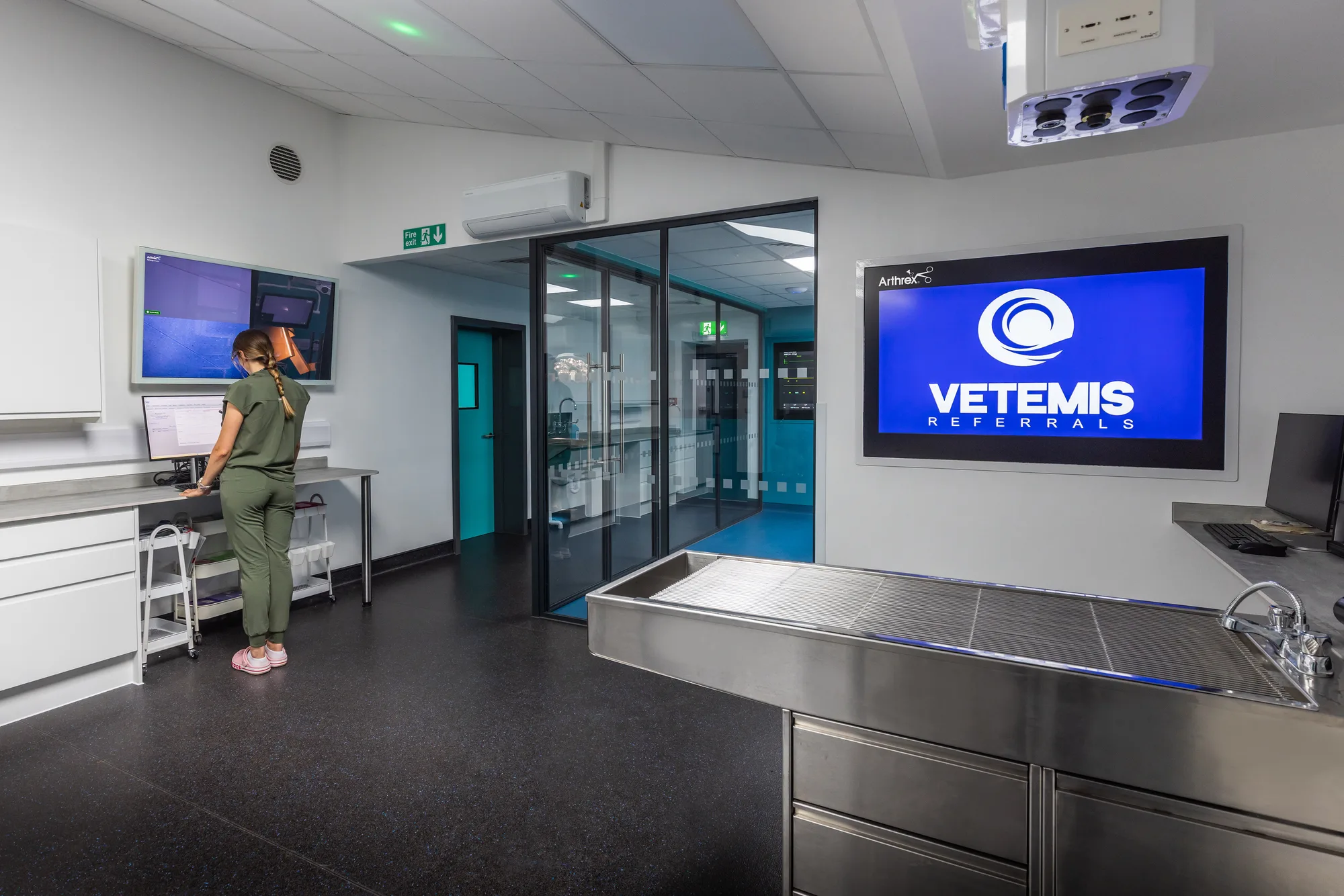
What phased delivery covers
The same construction scope as any other contract, plus everything that keeps a regulated building running through it.
Phasing plan
The building is divided into sections that can be built and handed back independently, sequenced against your clinical timetable so the rooms that generate the income are never all out at once.
Containment
Sealed temporary partitions with their own extract, negative to the occupied side where the work warrants it, so dust stays inside the section being built rather than in the room next door.
Route management
Patient, staff and delivery routes are drawn for each phase, not improvised, including where a route has to change and how it is signed when it does.
Services isolations
Every isolation of power, water, drainage, ventilation, compressed air or suction is identified in advance, agreed with the practice manager and timed, usually outside the clinical day.
Noise and vibration control
The work that cannot be made quiet is identified early and scheduled into the hours the building can absorb it, which is a conversation about the appointment book rather than about the programme.
Section handover
Each section is commissioned, cleaned, released and documented as a handover in its own right, so the practice regains usable space progressively rather than in one event at the end.
Frequently Asked Questions
Can you really refurbish a practice without closing it?
Yes, and most of our clinical work is in buildings that stay open. It changes the sequence, the containment and the cost, not the scope. What it does require is a phasing plan agreed with the practice before the price is fixed, because how the building is divided is the single largest driver of what the job costs.
How long does a phased programme take?
Longer than the same scope in an empty building, and we do not quote a standard duration, because the programme is set by your clinical timetable rather than by ours. The honest answer is that it is established during the phasing conversation, once we know which rooms cannot stop and for how long each section can be released.
How do you stop dust reaching the clinical areas?
Sealed temporary partitions rather than sheeting, with their own extract so the working section is held negative to the occupied side. The HSE requires construction dust to be assessed and controlled like any other health risk. Cleaning between phases is scheduled work, not an afterthought at the end.
What happens to the services shared between phases?
They are the first thing the survey looks for, because a drainage run or a distribution board serving a room that cannot stop will frequently sit inside the section being built. Where that happens, temporary services are installed and proven before the section is touched, and the isolation is timed with the practice manager.
Do you work outside normal hours?
Where the work requires it, yes. Isolations and the noisiest work are usually scheduled outside the clinical day. It is not automatically the right answer, because out-of-hours work is more expensive and more error-prone, so it is planned deliberately against the appointment book rather than used as a default.
Is asbestos a bigger problem in a live building?
It is a bigger problem to discover late. The duty to assess before work that could disturb it comes from the Control of Asbestos Regulations. In an occupied clinical building an unexpected find stops the section and can stop the rooms around it, so the refurbishment and demolition survey happens before the phasing is agreed rather than after.
Who phased works suit
Buildings where closing is not an option and the work has to happen anyway.
-
Practices that cannot close
-
Room-by-room upgrade programmes
-
Practices replacing ageing plant
-
Practices Undergoing Rebranding
-
Specialist Healthcare Facilities
-
Equipment installs needing new services
Get in Touch
Whether you're planning a complete refurbishment or a small specialist build, we’re here to help you create a safe, efficient, and modern clinical environment.